Quick Summary: The best plants for Houston handle heat, humidity, heavy rain, clay soil, and the occasional freeze. Reliable picks include Texas lantana, salvia, Turk's cap, esperanza, Gregg's mistflower, yaupon holly, American beautyberry, Gulf muhly, little bluestem, and inland sea oats. Match each plant to your yard's sun, drainage, and space, and use fall's cooler weather to get roots established before next summer.
The best plants for Houston have to handle more than heat. A successful landscape also has to account for Gulf Coast conditions.
That includes humidity, heavy downpours, periods of drought, clay-heavy soils, and the occasional hard freeze. As a consequence, a plant that thrives elsewhere in Texas may struggle in the wrong spot here.
Fall is one of the best times to rethink planting beds because cooler weather can give many shrubs and perennials time to establish roots before the next Houston summer.
The key is matching each plant to the property. Important factors to consider are sun exposure, drainage, soil, mature size, and how much maintenance you actually want to provide.
Table of Contents
- What Plants Grow Best in Houston?
- 10 Houston Landscape Plants Worth Considering
- Best Flowering Plants and Perennials for Houston
- Best Shrubs for Houston Landscapes
- Best Plants for Full Sun in Houston
- Best Shade Plants for Houston
- Best Ornamental Grasses for Houston Landscapes
- Should You Choose Native Plants for a Houston Landscape?
- Best Drought-Tolerant Plants for Houston
- How to Choose Plants for Your Houston Landscape
- When Is the Best Time to Plant Flowers and Perennials in Houston?
- Common Mistakes When Choosing Houston Landscape Plants
- Our Favorite Plants for Houston Landscapes
- Frequently Asked Questions
What Plants Grow Best in Houston?
The best plants for Houston are species that tolerate Gulf Coast heat and humidity while matching the property's sunlight, drainage, and soil conditions.
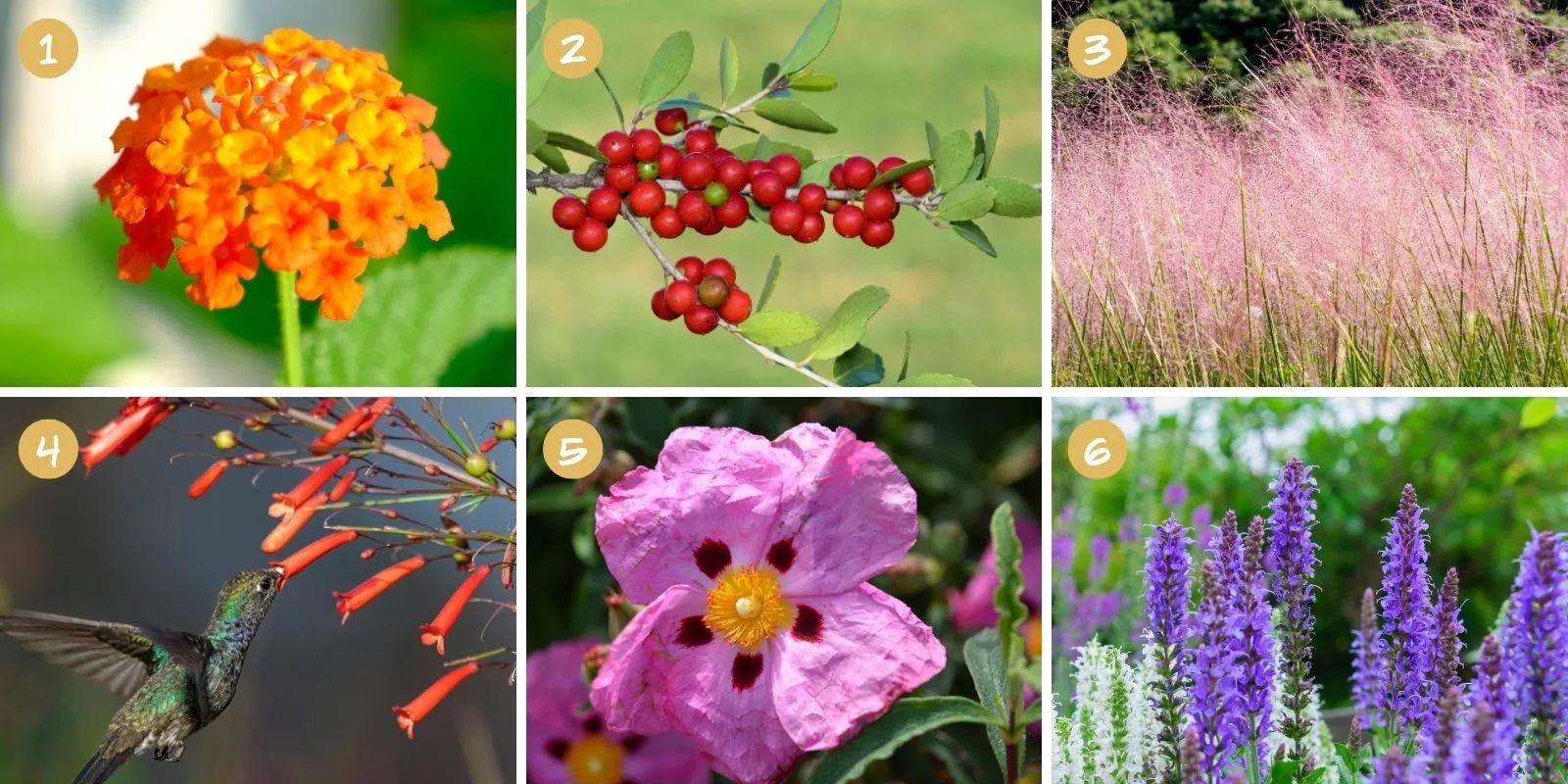
Reliable choices include Texas lantana, salvia, Turk's cap, esperanza, Gregg's mistflower, yaupon holly, American beautyberry, Gulf muhly, little bluestem, and inland sea oats.
"Houston-friendly" does not mean "right for every yard." Before choosing anything at the nursery, look at three conditions first:
- Sun exposure: full afternoon sun is very different from filtered morning light beneath mature trees.
- Drainage and soil: a drought-tolerant plant can still fail if its roots sit in saturated clay after heavy rain.
- Mature size: choose plants for the space they will occupy in several years, not the size of the nursery pot.
10 Houston Landscape Plants Worth Considering
Houston's growing season runs long, so flowering perennials can provide color for most of the year when they're matched to the right light and moisture.
The table below covers reliable performers. The plants with the most to teach a homeowner get their own section afterward.
| Plant | Light | Seasonal Interest and Best Use |
|---|---|---|
| Texas lantana | Full sun | Yellow, orange, and red flowers for sunny beds and pollinator plantings |
| Salvia | Sun to part sun | Blue, purple, or red flowers for borders and mixed perennial beds |
| Turk's cap | Part shade to shade | Red flowers for beds beneath trees and shaded areas |
| Esperanza | Full sun | Bright yellow flowers as a large accent or background plant |
| Gregg's mistflower | Sun to part sun | Blue-purple flowers for pollinator and naturalistic gardens |
| Yaupon holly | Sun to part shade | Evergreen structure (berries on female plants) for foundations, hedges, or accents |
| American beautyberry | Part shade | Purple-magenta berry clusters for woodland edges and naturalistic beds |
| Gulf muhly | Full sun | Pink-purple fall plumes for mass plantings and ornamental-grass beds |
| Little bluestem | Full sun | Blue-green foliage and copper fall color for native and drought-tolerant beds |
| Inland sea oats | Part shade to shade | Seed heads and graceful texture for shaded naturalistic areas |
Best Flowering Plants and Perennials for Houston
For long-lasting color, the strongest choices are usually plants that can take Houston heat without demanding constant intervention. The following options work particularly well when their light and drainage needs are matched correctly.
Texas Lantana
Texas lantana is one of the easiest ways to bring strong summer and fall color into a sunny Houston bed. Once established, it handles heat and relatively dry conditions well, and its clustered yellow, orange, and red flowers attract butterflies. Give it good sun and enough room to develop instead of squeezing it between small foundation plants.
Salvia
Salvias are useful because the group includes many heat-tolerant flowering plants with long bloom periods. They work well in sunny borders, pollinator gardens, and mixed beds with ornamental grasses. Different salvias have different moisture and drainage needs, so choose the species or cultivar for the exact site rather than treating every salvia as interchangeable.
Turk's Cap
Turk's cap is especially useful where the landscape transitions from sun into shade. Its red flowers bring color beneath trees and along partially shaded beds where many sun-loving perennials struggle. It also provides nectar for hummingbirds and works well in more natural-looking Houston landscapes.
Esperanza
Esperanza, or yellow bells, is a strong choice for a sunny area where a larger flowering accent is needed. It produces vivid yellow blooms through hot weather and can become substantial in size. Plan for that mature growth instead of using it where frequent pruning will be required to keep it away from windows or walkways.
Gregg's Mistflower
Gregg's mistflower earns its place through late-season blue-purple flowers and excellent butterfly activity. It works especially well in pollinator beds and looser native-style plantings. Because it can spread, give it room to form a natural mass rather than forcing it into a tightly controlled formal border.
Best Shrubs for Houston Landscapes
Flowers carry color, but shrubs carry structure. Shrubs hold their shape and form the bones of a landscape even when nothing nearby is blooming. A few evergreen and native shrubs do most of that work in Houston yards.
If a new shrub bed is going in where an old tree came out, grinding out the stump first clears the root competition that would otherwise work against a young planting.
Yaupon Holly
Yaupon holly is one of the most versatile Texas natives for Houston landscapes. It is evergreen, adaptable, and available in forms ranging from compact shrubs to small trees. Depending on the cultivar, it can work as a foundation plant, hedge, screen, or accent. Female plants can also produce red berries when pollination conditions are right.
Wax Myrtle
Wax myrtle is useful when you need evergreen screening with a softer, more natural appearance than a tightly clipped hedge. It grows relatively quickly and can handle the swings between wet and dry conditions common in Southeast Texas. Give it enough room, because forcing it into a narrow space creates unnecessary pruning work.
American Beautyberry
American beautyberry brings a different kind of seasonal interest. Its clusters of vivid purple berries stand out in late summer and fall, and the plant performs well in part shade. It is best suited to naturalistic beds, woodland edges, and locations where a slightly informal shape fits the design.
Possumhaw Holly
For winter interest, possumhaw holly is worth considering. Unlike evergreen yaupon, possumhaw drops its leaves and leaves clusters of red berries visible along bare branches. That contrast adds color and structure during a season when many flowering plants have faded.
Best Plants for Full Sun in Houston
For Houston full sun, prioritize plants that can tolerate intense summer exposure after establishment.
Texas lantana, salvia, esperanza, Gulf muhly, black-eyed Susan, rock rose, and flame acanthus are all strong candidates when the site drains properly.
Remember that drought tolerant does not mean drought proof. Newly planted shrubs, grasses, and perennials still need consistent establishment watering while their root systems develop. Once established, irrigation needs can often be reduced based on the plant and site conditions.
Planting beds also perform better when the surrounding turf is managed correctly. Ventura Landscape provides residential lawn care in Houston for homeowners who want routine mowing and lawn maintenance handled alongside the rest of the property.
Best Shade Plants for Houston
Shade is common in older Houston neighborhoods with mature live oaks and other established trees. The challenge is that "shade" can mean several different conditions:
- Full shade: little direct sunlight during the day.
- Part shade: several hours of sun or bright filtered light.
- Dappled shade: broken sunlight moving through a tree canopy.
Turk's cap, American beautyberry, and inland sea oats are strong options for many shaded landscapes. Fatsia, camellias, and oakleaf hydrangeas can also work where their soil, moisture, and drainage needs are met.
Do not assume every shaded area stays moist. Large tree roots can compete aggressively for water, leaving soil beneath a canopy surprisingly dry even though the area receives little direct sun.
If mature trees are shaping the light conditions across the property, proper tree trimming and care can also affect how much filtered light reaches lawns and planting beds.
Best Ornamental Grasses for Houston Landscapes
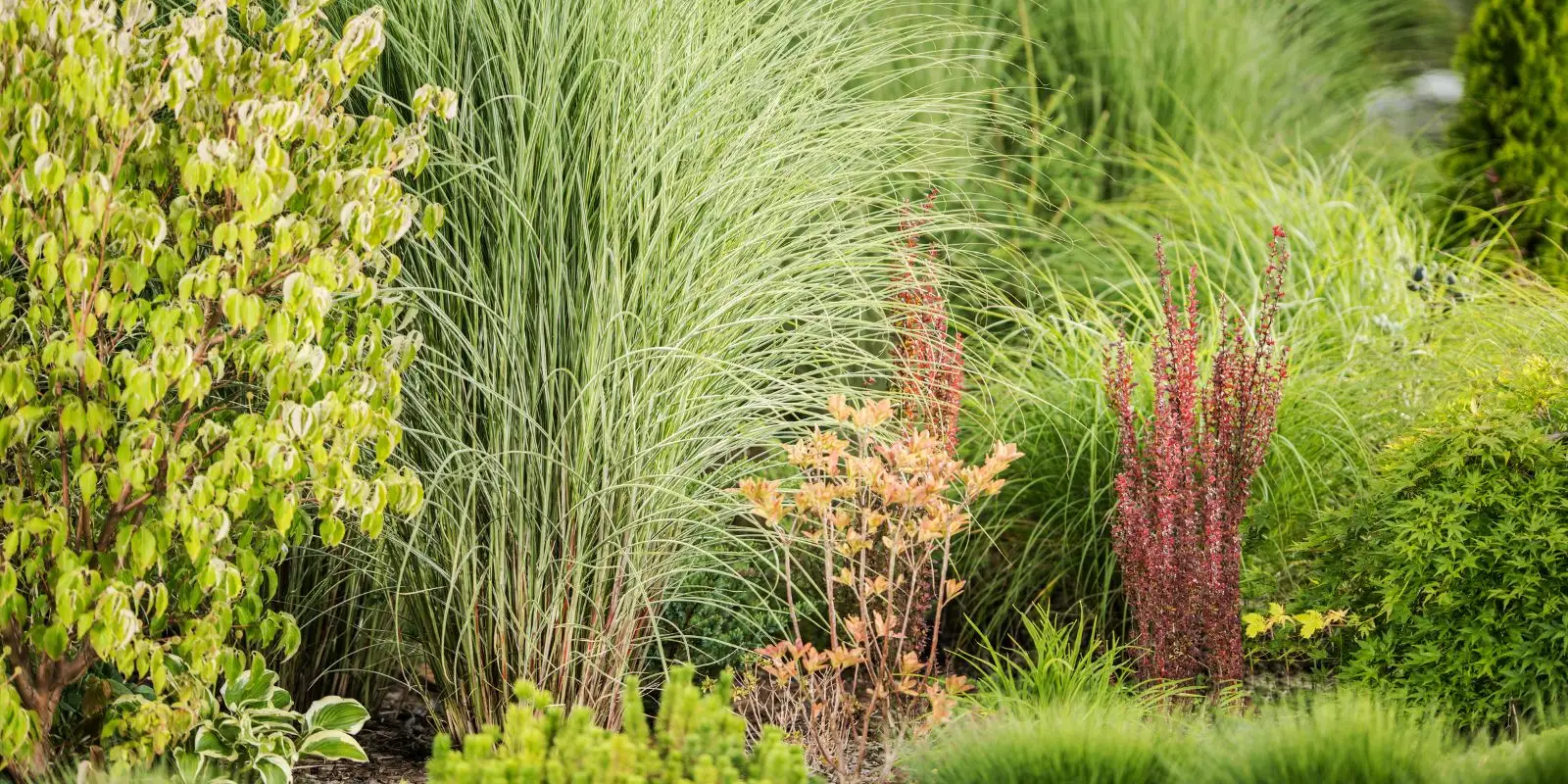
Ornamental grasses add movement, texture, and seasonal interest without relying entirely on flowers. They are especially effective when repeated in groups instead of planted as isolated specimens.
Gulf Muhly
Gulf muhly is a standout fall plant because its airy pink-purple plumes become the visual focus of a sunny bed. It works especially well in masses along walkways, large borders, and contemporary or native-inspired landscapes. Good sun helps produce its best shape and flowering display.
Little Bluestem
Little bluestem provides upright texture through the growing season and develops coppery fall color as temperatures change. Once established, it is relatively drought tolerant and pairs well with lantana, salvia, and other sun-loving native or adapted plants.
Inland Sea Oats
Inland sea oats fills a different role because it performs in shade and part shade. Its arching seed heads create movement beneath trees and along woodland-style beds. It can reseed and spread, so it is better suited to naturalistic areas than highly controlled formal borders.
Should You Choose Native Plants for a Houston Landscape?
Native Texas plants can be excellent choices for Houston because many are adapted to regional conditions and provide food or habitat for native wildlife.
However, "native" alone does not guarantee success. The plant still has to match the property's sunlight, drainage, soil, and available space.
Well-placed native plants can provide several advantages:
- Adaptation to regional weather patterns
- Food and habitat for pollinators and other wildlife
- Lower irrigation needs for many species after establishment
- A strong fit with naturalistic and Gulf Coast landscape styles
- Less dependence on intensive pruning or inputs when the plant is correctly matched to the site
Native does not mean zero maintenance. Even drought-tolerant natives need establishment watering, and some will perform poorly if planted in saturated clay or the wrong light.
Best Drought-Tolerant Plants for Houston
For beds that need to go longer between waterings once established, this shortlist holds up well:
- Texas lantana
- Yaupon holly
- Gulf muhly
- Flame acanthus
- Rock rose
- Salvia
- Little bluestem
Drought Tolerance Isn't the Only Concern in Houston
Houston can swing from a dry stretch straight into heavy rainfall in a short period. The area's heavy clay soil can stay saturated for days after a storm.
A plant that performs well in the drier conditions of Central or West Texas can struggle here if its roots sit in waterlogged clay. Drought tolerance and wet-soil tolerance are two different things, and not every "drought-tolerant Texas native" has both.
Key takeaway: choose for drought tolerance and drainage tolerance together, not drought tolerance alone. For plants that need sharper drainage than a clay bed naturally offers, a raised bed or soil amendment can make the difference.
How to Choose Plants for Your Houston Landscape
The plant list above only works if it's applied to your actual property. These six steps turn it into a plan.
1. Map Sunlight
Watch a bed at different times of day rather than assuming it's "sunny" or "shady." Morning sun and intense late-afternoon Houston sun create very different growing conditions, even in the same bed.
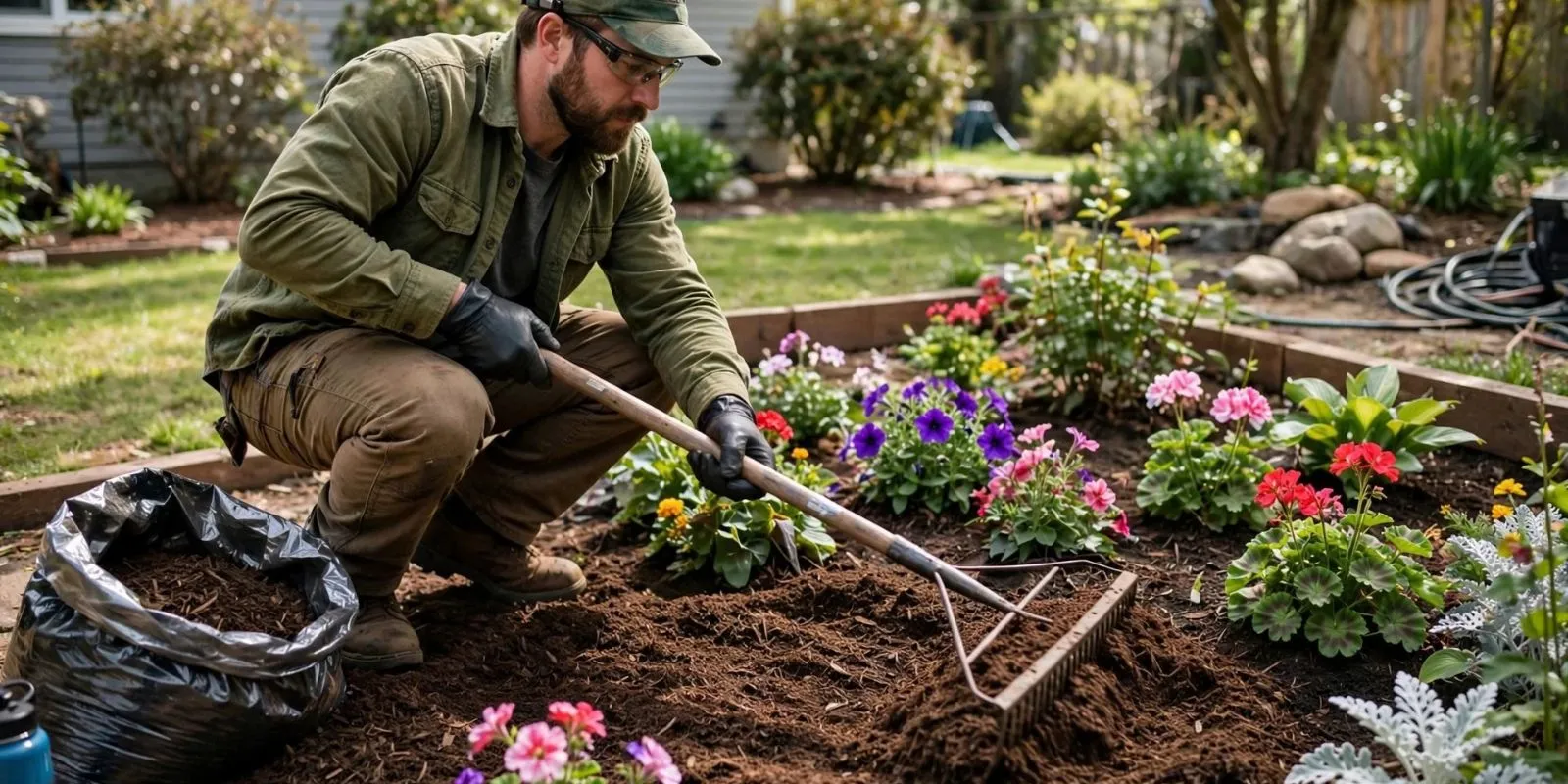
Ventura Landscape offers flowerbed and planting services that can account for the property's sunlight, drainage, existing trees, and desired style before plants are installed.
2. Check Drainage
After a heavy rain, walk the property and note where water actually sits. A plant that needs excellent drainage shouldn't go in a low spot just because the sunlight happens to match.
3. Consider Mature Size
Don't choose based on the size a plant is at the nursery. Check its mature height, width and growth habit so it isn't blocking a window, crowding a walkway, or needing constant pruning within a year or two of planting.
4. Group Plants With Similar Water Needs
Don't tuck a moisture-loving plant into the middle of a drought-tolerant bed. Grouping plants by irrigation need makes watering far more efficient and keeps any one plant from being chronically over- or under-watered.
5. Design in Layers
A well-built Houston landscape usually combines several layers: trees or tall screening, then structural shrubs, then flowering perennials, then grasses or groundcovers filling in above the lawn. Layering like this is where a planned landscape starts to look noticeably different from a collection of individual plants.
A paver border along the bed edge is also a simple way to keep plantings visually separate from the turf and cut down on stray mower damage.
6. Plan for More Than One Season
Combine plants with different bloom times, evergreen structure, and seasonal foliage so the bed has something going on across the year. The goal isn't getting every plant to bloom at once. It's having something worth looking at in every season.
When Is the Best Time to Plant Flowers and Perennials in Houston?
Fall and early spring are often excellent planting periods for many Houston landscape plants because moderate temperatures reduce heat stress while roots establish. Fall is especially useful for many shrubs and hardy perennials because the soil can remain warm enough for root growth even after top growth slows.
That does not create one universal planting date for every species. Tropical plants, tender annuals, and cold-sensitive selections have different requirements.
Whatever the season, new plantings need consistent watering during establishment, even species that will eventually become drought tolerant. If you're getting the turf ready for winter at the same time, our Houston fall lawn care checklist covers the lawn side of the season.
Common Mistakes When Choosing Houston Landscape Plants
- Buying plants only because they look good at the nursery that week.
- Ignoring mature height and width.
- Putting full-sun plants into deep shade.
- Assuming every Texas native tolerates Houston clay and poor drainage.
- Overwatering drought-tolerant plants after they are established.
- Ignoring low spots that hold water after storms.
- Planting one of everything instead of repeating a smaller palette.
- Choosing too many plants that require constant pruning or seasonal replacement.
- Assuming drought-tolerant means a new plant can survive without establishment watering.
One of the easiest ways to make a landscape look more deliberate is to repeat plants instead of collecting plants. Groups of the same flower, grass, or shrub create stronger visual impact and make the planting feel designed rather than pieced together.
Our Favorite Plants for Houston Landscapes
| Landscape Need | Recommended Plants |
|---|---|
| Long-lasting color | Lantana, salvia, esperanza |
| Shade | Turk's cap, American beautyberry, inland sea oats |
| Evergreen structure | Yaupon holly, wax myrtle |
| Pollinators | Gregg's mistflower, lantana, salvia |
| Ornamental grass | Gulf muhly, little bluestem |
| Native character | American beautyberry, Turk's cap, flame acanthus |
| Drought tolerance | Lantana, yaupon holly, Gulf muhly |
| Winter interest | Possumhaw holly |
The best combination depends on the property. A sunny front bed may call for Gulf muhly, lantana, and salvia, while a shaded backyard beneath mature trees may be better served by Turk's cap, beautyberry, and inland sea oats.
The goal is not to use every recommended plant. It's to build a smaller palette that fits the site and repeats naturally throughout the landscape.
Need help choosing the right plants for your Houston property? Ventura Landscape can plan and install flower beds and plantings based on your property's sunlight, drainage, existing landscape, and desired look. Request a quote to discuss your landscape.
Ventura Landscape provides professional landscaping services in Houston, including lawn care, tree services, stump grinding, planting, hardscaping, and landscape improvements for residential and commercial properties.
Frequently Asked Questions
What Flowers Grow Best in Houston, Texas?
Some of the best flowers for Houston include Texas lantana, salvia, Turk's cap, esperanza, black-eyed Susan, pentas, and Gregg's mistflower. The right choice depends on sunlight, drainage, soil, and available space. Full-sun plants will struggle in deep shade, while moisture-sensitive plants can fail in low areas that stay wet after storms.
What Plants Can Survive Houston's Summer Heat?
Texas lantana, esperanza, salvia, Gulf muhly, yaupon holly, flame acanthus, and other established heat-tolerant plants can perform well through Houston summers. Even heat- and drought-tolerant plants need consistent watering after planting, however. Their ability to handle dry conditions improves as healthy root systems become established.
What Are the Best Low-Maintenance Plants for Houston?
Low-maintenance Houston landscapes often use native or well-adapted plants such as yaupon holly, Turk's cap, Gulf muhly, lantana, and American beautyberry. The biggest maintenance savings come from matching the plant to the site. A poorly placed "low-maintenance" plant can require more pruning, watering, drainage correction, or replacement than the right plant would.
What Are the Best Native Plants for Houston?
Strong native choices for Houston include yaupon holly, Turk's cap, American beautyberry, Texas lantana, Gulf muhly, flame acanthus, Gregg's mistflower, little bluestem, and inland sea oats. Native status is only one factor, so match each plant to the property's light, drainage, soil, and mature-space requirements.
What Plants Grow Well in Houston Shade?
Turk's cap, American beautyberry, and inland sea oats are dependable options for many shaded Houston landscapes. Fatsia, camellias, and oakleaf hydrangeas can also work in appropriate conditions. Before planting, determine whether the area is full shade, part shade, or dappled shade and whether tree roots are making the soil unusually dry.
What Is the Best Time of Year to Plant in Houston?
Fall and early spring are often good times to install many Houston shrubs and perennials because moderate temperatures reduce heat stress while roots establish. The ideal timing still depends on the plant. Cold-sensitive tropicals, annual flowers, and hardy woody plants have different planting windows, and all new installations need establishment watering.