
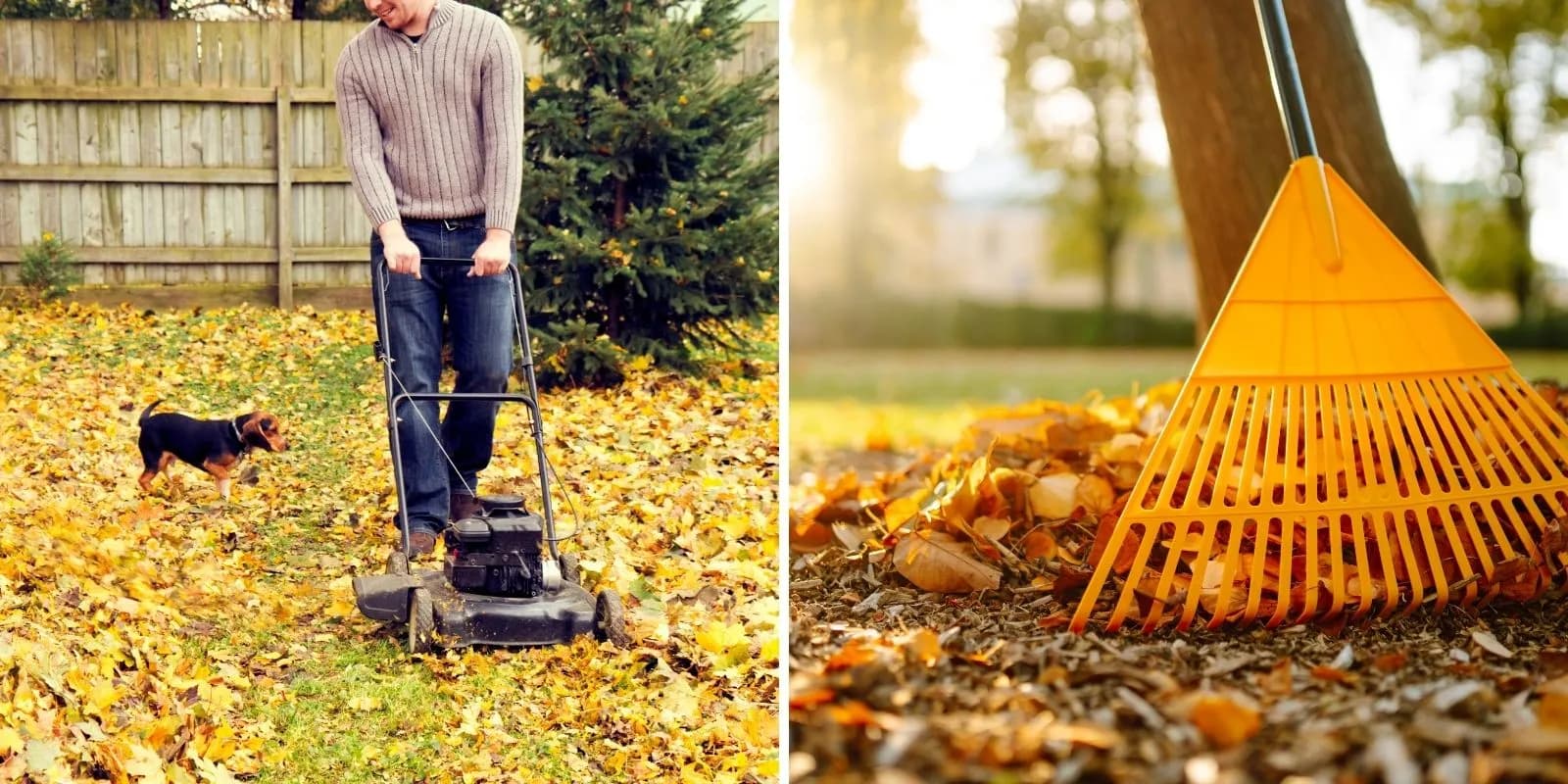
Quick Summary: You don't have to pick just one. Mulch light to moderate layers of dry leaves with your mower as long as the grass stays visible afterward. Remove leaves that are thick, wet, matted, or diseased, or that keep covering the turf after mowing. Many Houston lawns do best with a mix: mulch routine leaf fall and collect the excess. Removed leaves are yard waste in Houston, so keep them out of the curbside recycling cart.
When comparing leaf mulching vs. removal, Houston homeowners usually don’t need to choose one method for every leaf that falls. A light layer of dry leaves can often be mulched into the lawn, while thick, wet, or matted leaves are better removed before they cover the grass.
The right approach depends on your lawn, the amount of leaf drop, recent weather, and how well your mower can break leaves into small pieces. In many Houston yards, the best solution is a combination of mulching manageable leaf fall and removing the excess.
Table of Contents
- Is It Better to Mulch or Remove Leaves?
- What Is Leaf Mulching?
- What Is Leaf Removal?
- Leaf Mulching vs. Removal for Houston Lawns
- When Should You Mulch Leaves?
- When Should You Remove Leaves?
- Can You Mulch Some Leaves and Remove the Rest?
- How to Mulch Leaves Properly
- What Should Houston Homeowners Do With Removed Leaves?
- Leaf Mulching vs. Removal: Key Takeaways for Houston Homeowners
- Frequently Asked Questions
Is It Better to Mulch or Remove Leaves?
Neither option is always better. Light to moderate amounts of dry leaves can usually be mulched when a mower can shred them finely enough that the grass remains visible.
Heavy accumulations, wet leaves, diseased material, or leaves that continue covering the turf after mowing should generally be removed or partially removed.
| Factor | Leaf Mulching | Leaf Removal |
|---|---|---|
| Best for | Light to moderate leaf cover | Heavy or matted accumulation |
| Labor | Generally lower | Generally higher |
| Organic matter | Returned to the lawn | Removed from the lawn |
| Equipment | Mower or mulching blade | Rake, blower, mower bag or collection equipment |
| Wet leaves | Usually harder to process | Often more practical |
| Heavy leaf drop | May overwhelm mower | Better suited for large amounts |
| Houston use case | Routine light leaf fall | Dense accumulation and problem areas |
Rather than automatically raking every leaf or mowing through any amount of debris, look at the condition of the lawn after cleanup.
If shredded leaves disappear between the grass blades and the turf remains visible, mulching is usually doing its job. If the grass is buried beneath chopped leaves, there is simply too much material.
What Is Leaf Mulching?
Leaf mulching uses a lawn mower to chop fallen leaves into small fragments instead of collecting and hauling them away. Those pieces settle between the grass blades, where they gradually break down.
This is different from simply leaving whole leaves on the lawn.
Properly mulched leaves should be small and evenly distributed. You should still be able to see the grass after mowing. Rows of shredded material, heavy clumps, or an entire layer covering the turf are signs that the lawn has more leaf material than it can reasonably handle at one time.
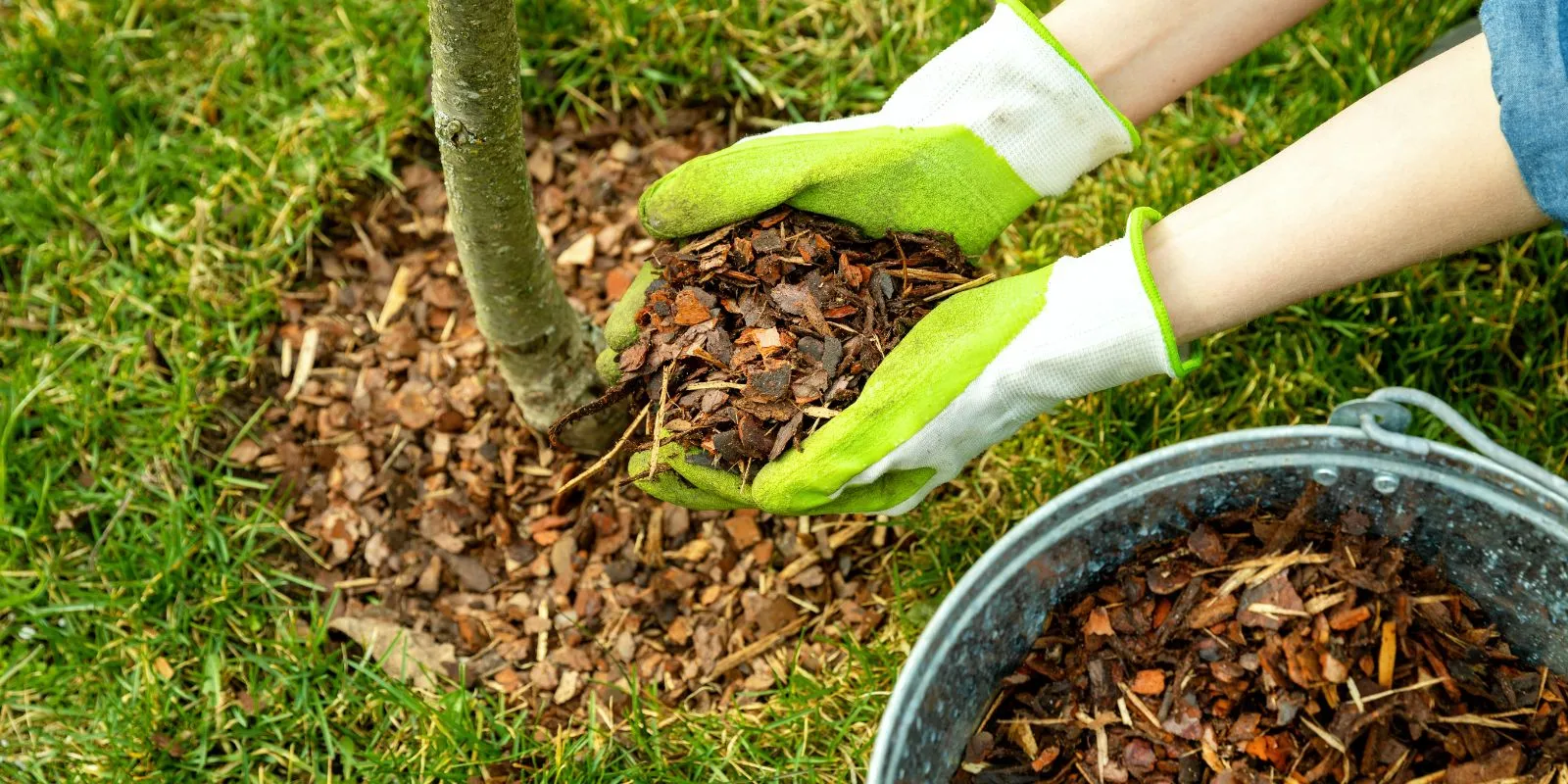
For Houston homeowners already mowing regularly, mulching leaves can be an easy addition to normal residential lawn care.
Benefits of Mulching Leaves
When conditions are right, the benefits of mulching leaves include:
- Returning organic material to the lawn. Finely shredded leaves gradually decompose instead of being removed from the property.
- Recycling some nutrients. Decomposing plant material returns nutrients and organic matter to the soil.
- Reducing cleanup. There may be fewer bags of leaves to rake, move and dispose of.
- Saving time. Light leaf fall can often be handled during routine mowing rather than through a separate cleanup.
- Keeping useful plant material on site. Leaves do not automatically have to be treated as waste.
Texas A&M AgriLife similarly recommends returning finely distributed grass clippings to turf and notes that plant material can recycle nutrients when properly dispersed.
Leaf mulching should complement good mowing, watering and fertilization practices—not replace them.
Potential Drawbacks of Mulching Leaves
Mulching becomes less useful when there are more leaves than the mower can process effectively.
Problems are more likely when:
- Leaf accumulation is particularly heavy.
- Leaves are wet and sticking together.
- Large or tough leaves do not shred well.
- The mower leaves piles or rows behind.
- Diseased plant material is being spread across the lawn.
- Shredded leaves continue covering most of the grass.
In those situations, removing at least some of the material is usually the better option.
What Is Leaf Removal?
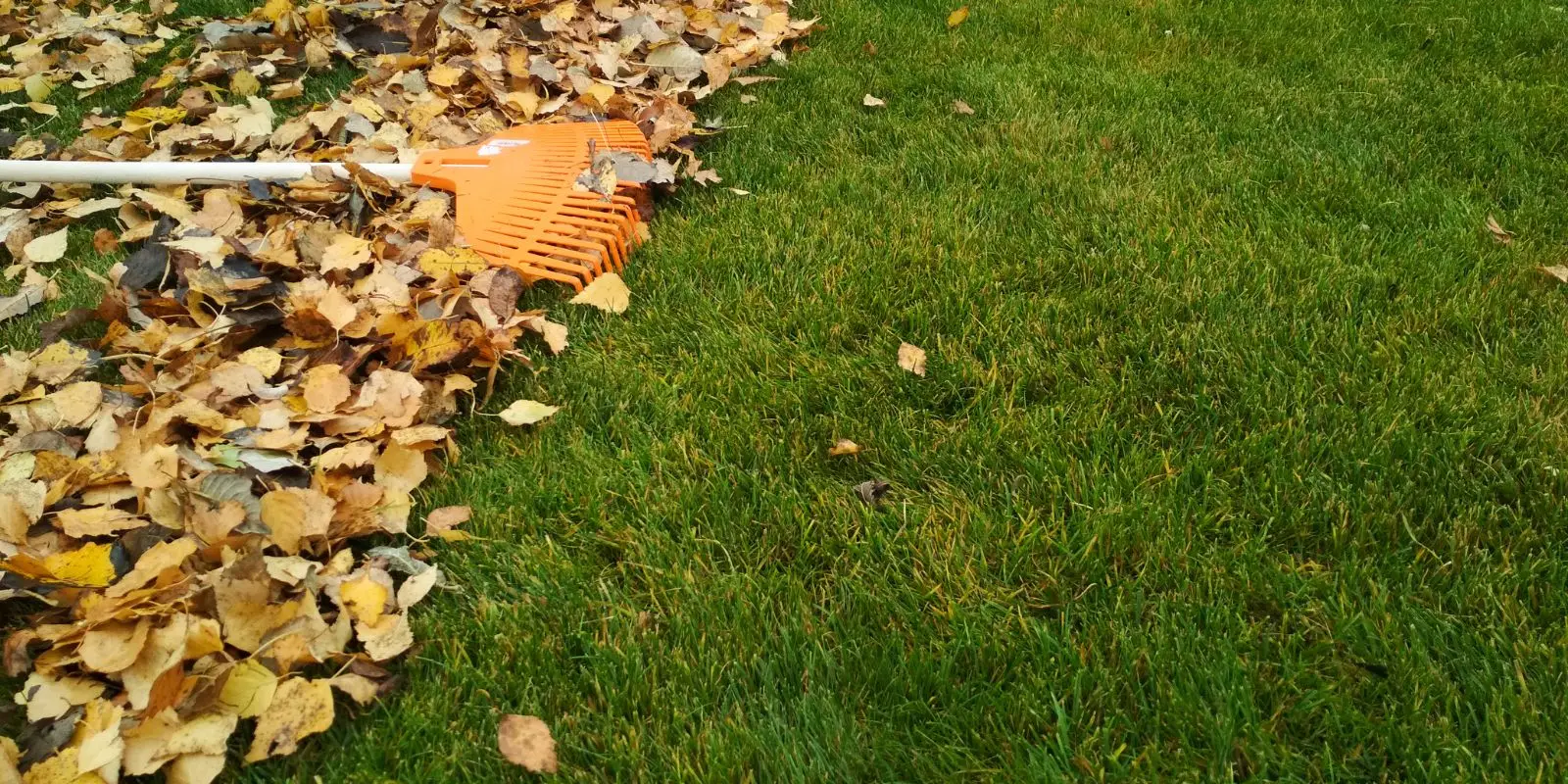
Leaf removal means physically clearing fallen leaves from the lawn rather than leaving the shredded material in place. Depending on the property, that may involve raking, blowing, mower collection, vacuum equipment or professional lawn cleanup.
Removing leaves is not inherently worse for the lawn. If trees produce more leaf litter than the turf can absorb without becoming covered, removing the excess protects the grass from being buried beneath a dense layer.
Benefits of Removing Leaves
Leaf removal can be particularly useful when you need to:
- Clear a thick layer that is covering the turf.
- Manage heavy seasonal leaf drop.
- Remove wet or matted leaves that will not shred effectively.
- Dispose of diseased leaf material instead of redistributing it.
- Clear leaves from sidewalks, patios, driveways and drainage areas.
- Restore visibility to grass after leaves have accumulated for an extended period.
Properties with mature trees—common in areas such as River Oaks, Bellaire and West University Place—may simply receive more leaf material than can reasonably be mulched into the lawn at once.
Drawbacks of Leaf Removal
The primary tradeoff is the additional work involved.
Removing leaves means they must be collected, moved and eventually reused or disposed of. It can also remove organic material that otherwise could have broken down within the landscape.
For homeowners doing the work themselves, repeated raking and bagging can take considerably more time than mowing through a manageable layer of leaves. Professional cleanup adds a cost, although it can make sense on larger or heavily wooded properties.
Leaf Mulching vs. Removal for Houston Lawns
Houston lawns need a slightly different approach than lawns in colder parts of the country.
Generic fall lawn-care advice often assumes that grass is quickly heading into a long winter dormancy or that leaves will soon be covered by snow. Southeast Texas does not follow that same seasonal pattern.
Instead, Houston homeowners should look at the actual condition of their turf and the weather at the time leaves are falling.
Consider Your Grass Type
St. Augustine grass is one of the most common warm-season turfgrasses in Texas. Texas A&M AgriLife recommends maintaining St. Augustine grass at roughly 2 to 4 inches, depending on the cultivar and mowing conditions.
They also advise homeowners not to remove more than about one-third of the green canopy in a single mowing. That makes visibility an especially useful test when mulching leaves.
After mowing, look down into the turf. Small pieces scattered between the grass blades are one thing. A layer of leaf debris sitting on top of the grass is another.
Even beneficial organic material can become excessive if enough of it accumulates to cover the lawn.
Houston's Climate Changes the Decision
Instead of following a fixed northern "fall cleanup" schedule, consider current conditions.
Ask:
- Is the grass still actively growing?
- Are the leaves dry enough to shred?
- Has recent rainfall left them wet and matted?
- How much leaf material is on the lawn?
- Does the property drain well?
- Is the area heavily shaded?
- Is the turf already thin, stressed or recovering from another problem?
A sunny, established lawn with a light layer of dry leaves may handle mulching with no problem. A shaded lawn covered with wet leaves after several rainy days may need removal instead.
For broader seasonal maintenance, our Houston fall lawn care checklist covers additional tasks worth addressing as temperatures begin to change.
Watch for Thick, Wet Leaf Layers
Houston's humidity and periodic rainfall can turn fallen leaves into a heavy, compact layer.
The problem is not that properly mulched leaves automatically cause lawn disease. The concern is excessive material sitting over the turf, particularly when it stays wet and restricts the grass underneath.
If leaves have already formed a mat, trying to grind the entire layer into the lawn in one pass may create more debris than the turf can handle. Remove some first, then mulch what remains if conditions allow.
When Should You Mulch Leaves?
Leaf mulching is usually worth considering when:
- Leaves are reasonably dry.
- Leaf coverage is light to moderate.
- Your lawn is established and in good condition.
- Your mower can chop the leaves into small pieces.
- The material disperses evenly between the grass blades.
- Most of the turf remains clearly visible after mowing.
Sharp mower blades also matter. Texas A&M recommends keeping mower blades sharp to improve cut quality and reduce unnecessary turf stress.
Do not wait until the yard is buried beneath several rounds of leaf drop. Smaller amounts are much easier to process during routine mowing.
Not sure whether your lawn needs routine mowing, leaf cleanup, or additional maintenance? Request a quote from Ventura Landscape, and we can help determine the right approach for your property.
When Should You Remove Leaves?
Remove some or all of the leaves when:
- They form a dense blanket over the lawn.
- Leaves have become wet and matted.
- Mulching still leaves the grass covered.
- There is more material than your mower can process efficiently.
- Leaves are collecting heavily on sidewalks, patios or drainage areas.
- You are dealing with diseased plant material.
- The turf is thin, damaged or otherwise vulnerable.
Removing leaves does not mean every stray leaf needs to disappear.
If 70 percent of the material can be mulched effectively but the remaining 30 percent continues covering the lawn, collect the excess and leave the finely shredded material behind.
Can You Mulch Some Leaves and Remove the Rest?
Yes. For many Houston properties, combining leaf mulching and removal is the most practical approach.
Start by mulching a manageable layer during regular mowing. Once you finish, inspect the turf. If the grass remains visible and the pieces are finely distributed, leave them in place.
If piles, rows or thick patches remain, collect the excess.
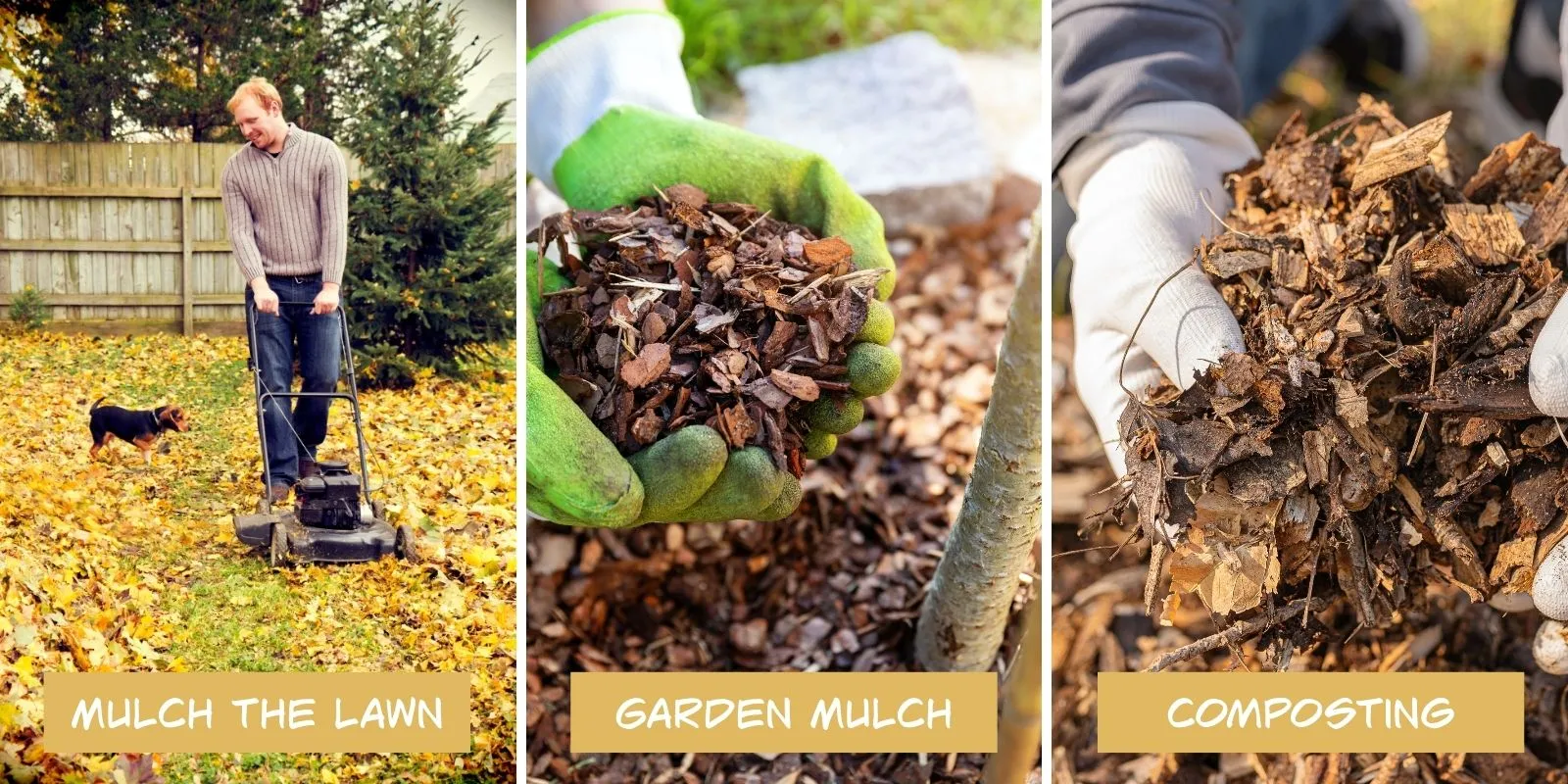
Suitable leaves can also be repurposed elsewhere on the property. Depending on the landscape, collected leaves may be composted or used appropriately in planting areas rather than automatically being discarded.
This approach allows you to keep the benefits of leaf mulching without forcing more organic material into the lawn than it can reasonably handle.
How to Mulch Leaves Properly
Follow these steps when mulching leaves with a lawn mower:
- Wait for reasonably dry conditions. Dry leaves are typically easier to chop and disperse than wet, matted material.
- Remove branches and debris. Pick up sticks, stones and other objects before mowing.
- Check your mower blades. Sharp blades produce a cleaner cut and process material more effectively.
- Mow before leaves become too deep. Do not wait for multiple heavy layers to accumulate.
- Make another pass if necessary. Mowing from a second direction can help break larger pieces into finer material.
- Inspect the lawn afterward. The turf should still be visible.
- Remove excess debris. If shredded material remains in piles or covers the grass, collect some of it.
- Repeat as leaves continue falling. Routine maintenance is easier than dealing with one massive cleanup.
A standard mower may be enough for light leaf cover. Dedicated mulching blades or a mower designed for mulching can make it easier to process larger amounts.
The same principle applies to broader landscape maintenance: regular, smaller maintenance tasks are generally easier to manage than allowing problems to accumulate.
What Should Houston Homeowners Do With Removed Leaves?
If you decide on lawn leaf removal, don't put the leaves in your City of Houston curbside recycling cart. The City's current recycling guidance specifically lists leaves, grass, branches and twigs as yard waste rather than accepted recycling material.
Houston's Solid Waste Management Department provides yard-waste collection options. Current guidance allows qualifying yard waste to be placed in 100% biodegradable or compostable bags that meet specified standards or in appropriate reusable personal containers. Yard waste should be kept separate from household trash and other materials.
Houston also operates residential drop-off centers that accept tree and yard waste. At those facilities, leaves must be bagged in compostable bags.
Because collection schedules and requirements can change, check the City's current Solid Waste guidance or HTX Collects information before setting out a large amount of yard debris.
Leaf Mulching vs. Removal: Key Takeaways for Houston Homeowners
Leaf mulching and leaf removal both have a place in Houston lawn care.
Mulch leaves when the layer is manageable, the material is reasonably dry, and your mower can chop it finely enough that the grass remains visible. Remove some or all of the leaves when they become thick, wet, matted, diseased or simply too abundant for the lawn to absorb.
You do not have to treat it as an either-or decision. Many properties benefit from mulching routine leaf fall and removing only the excess.
If you would rather leave the mowing and cleanup to a professional, Ventura Landscape provides residential lawn care in Houston. Request a quote to discuss your property's lawn and landscape maintenance needs.
Frequently Asked Questions
Is It Better to Mulch or Remove Leaves From Your Lawn?
It depends on the amount and condition of the leaves. A light to moderate layer of dry leaves can often be mulched effectively. Heavy, wet or matted leaves should usually be removed or partially removed if they continue covering the grass after mowing.
The easiest test is to inspect your lawn afterward. If you still see healthy grass with small leaf pieces dispersed between the blades, mulching is working. If shredded material covers the turf, remove the excess.
Is It Okay to Mulch Leaves Into St. Augustine Grass?
Yes, manageable amounts of leaves can be mulched into St. Augustine grass as long as they are shredded finely and do not cover the turf. The grass should remain visible after mowing rather than sitting beneath a thick layer of leaf fragments.
Also maintain an appropriate mowing height and avoid taking off too much grass at once. Texas A&M recommends roughly a 2- to 4-inch mowing range for St. Augustine grass and following the one-third mowing rule.
Can Too Many Mulched Leaves Hurt a Lawn?
Yes. The benefit comes from finely shredded material that settles between grass blades, not from piling organic debris over the turf. If mulched leaves form clumps or a continuous layer that obscures the grass, the lawn has more material than it can reasonably handle.
Remove some of the excess and leave only the finely dispersed fragments.
Should You Mulch Wet Leaves?
Dry or mostly dry leaves are generally easier to mulch. Wet leaves tend to stick together, form clumps and move less efficiently through a mower, making it harder to distribute the material evenly through the grass.
If leaves are saturated and matted, allow them to dry when practical or remove part of the accumulation before mowing.
How Often Should You Mulch Leaves?
Mulch leaves often enough to prevent a deep layer from accumulating. During periods of steady leaf drop, handling smaller amounts during regular mowing is usually easier than waiting until the entire lawn is covered.
The exact frequency depends on your trees, weather and lawn. Use leaf depth and the condition of the turf—not a rigid calendar—as your guide.