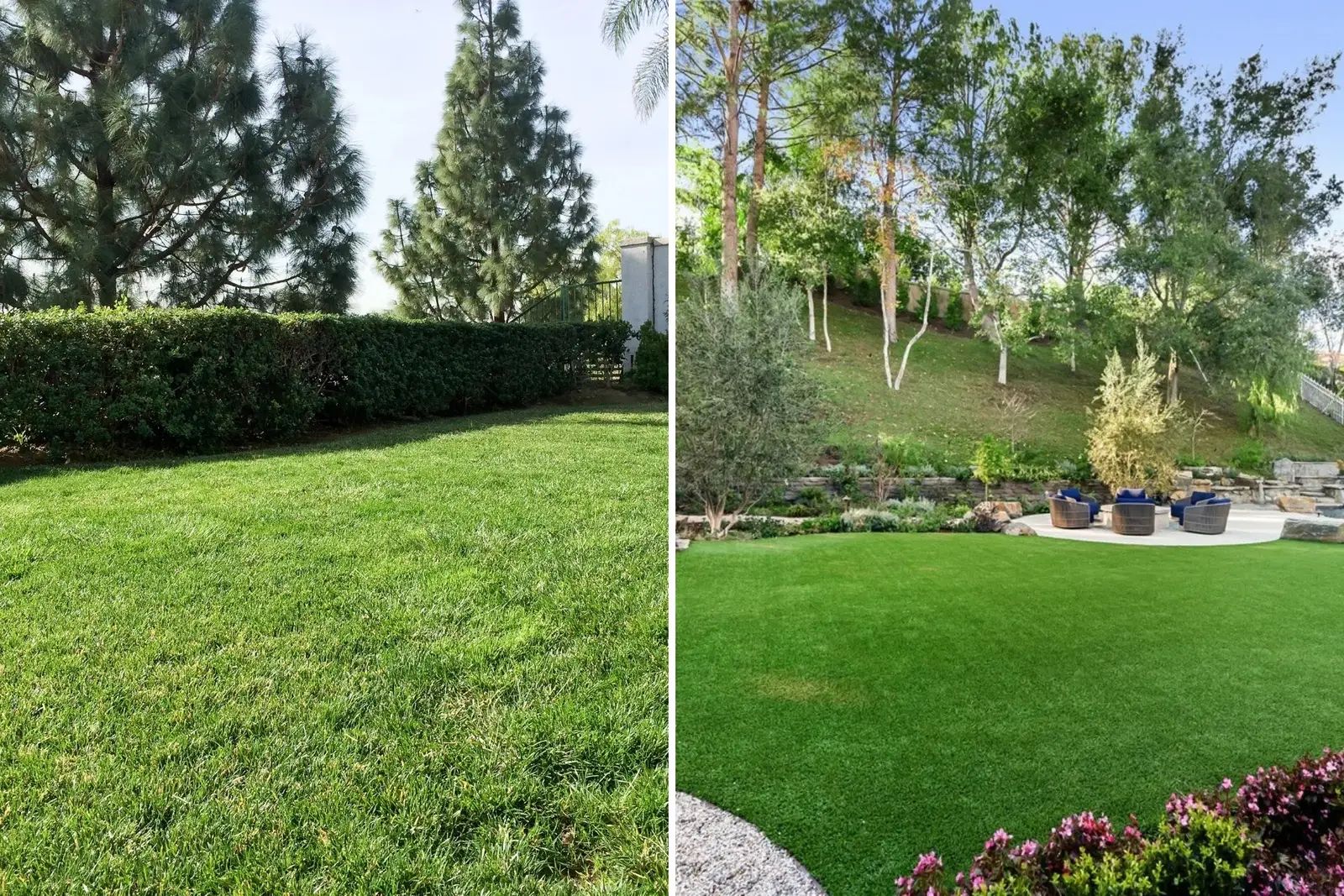
Quick Summary: Artificial turf is usually the better choice for deeply shaded Houston backyards where grass keeps failing, because it doesn't need sunlight and stays green year-round. Natural grass, such as shade-tolerant St. Augustine, can still be the better investment where enough filtered light reaches the ground and you want lower upfront costs. Many yards do best with both: a living lawn in the sun and turf in the problem spots.
A mature oak tree can make a Houston backyard feel like a peaceful retreat, but keeping healthy grass beneath its canopy isn't always easy.
If your lawn has become patchy, muddy, or bare despite regular maintenance, you may be considering artificial turf vs. natural grass as a long-term solution.
The right choice depends on how much sunlight your yard receives, tree root competition, drainage conditions, foot traffic, and your maintenance budget. Artificial turf can provide consistent coverage in deeply shaded areas where living grass struggles. However, shade-tolerant natural grass may still thrive where enough sunlight reaches the ground.
Here's how to determine which option makes the most sense for your Houston backyard.
Table of Contents
- Artificial Turf vs. Natural Grass: Which Is Better for Shaded Houston Backyards?
- Why Does Natural Grass Struggle in Shady Houston Yards?
- Can Natural Grass Grow in a Shaded Houston Yard?
- When Is Artificial Turf the Better Choice for a Shaded Backyard?
- Artificial Turf vs. Natural Grass Cost in Houston
- How Houston's Heat and Rain Affect Artificial and Natural Grass
- Can You Combine Artificial Turf and Natural Grass in One Backyard?
- How Ventura Landscape Helps Houston Homeowners Choose the Right Lawn
- Get Expert Help Choosing Artificial or Natural Grass for Your Houston Backyard
- Frequently Asked Questions
Artificial Turf vs. Natural Grass: Which Is Better for Shaded Houston Backyards?
Artificial turf is generally better for deeply shaded Houston backyards where natural grass repeatedly fails to grow. It doesn't need sunlight, remains green throughout the year, and eliminates mowing.
However, natural grass may be the better investment in areas receiving sufficient sunlight, particularly for homeowners who prefer a living lawn and lower upfront installation costs.
When comparing artificial turf vs. real grass in Houston, consider how each surface performs under local conditions.
| Feature | Artificial Turf | Natural Grass |
|---|---|---|
| Sunlight requirements | Doesn't need sunlight to grow | Requires adequate sunlight |
| Deep shade | Maintains consistent coverage | May thin or develop bare patches |
| Installation cost | Generally higher upfront | Usually lower upfront |
| Maintenance | Cleaning, brushing, and occasional repairs | Mowing, watering, fertilizing, and weed management |
| Houston summer heat | Can become hot in direct sunlight | Generally stays cooler |
| Heavy rainfall | Requires properly designed drainage | Depends on soil and grading |
| Pet traffic | Resists worn paths | Can develop damaged or muddy areas |
| Environmental impact | Less routine irrigation but uses synthetic materials | Living vegetation that requires ongoing care |
Neither option is universally better.
A backyard with filtered afternoon light may support healthy St. Augustine grass, while a narrow side yard beneath dense trees may be better suited to artificial turf.
The goal is to choose a surface that works with your property's conditions instead of continually fighting them.
Why Does Natural Grass Struggle in Shady Houston Yards?
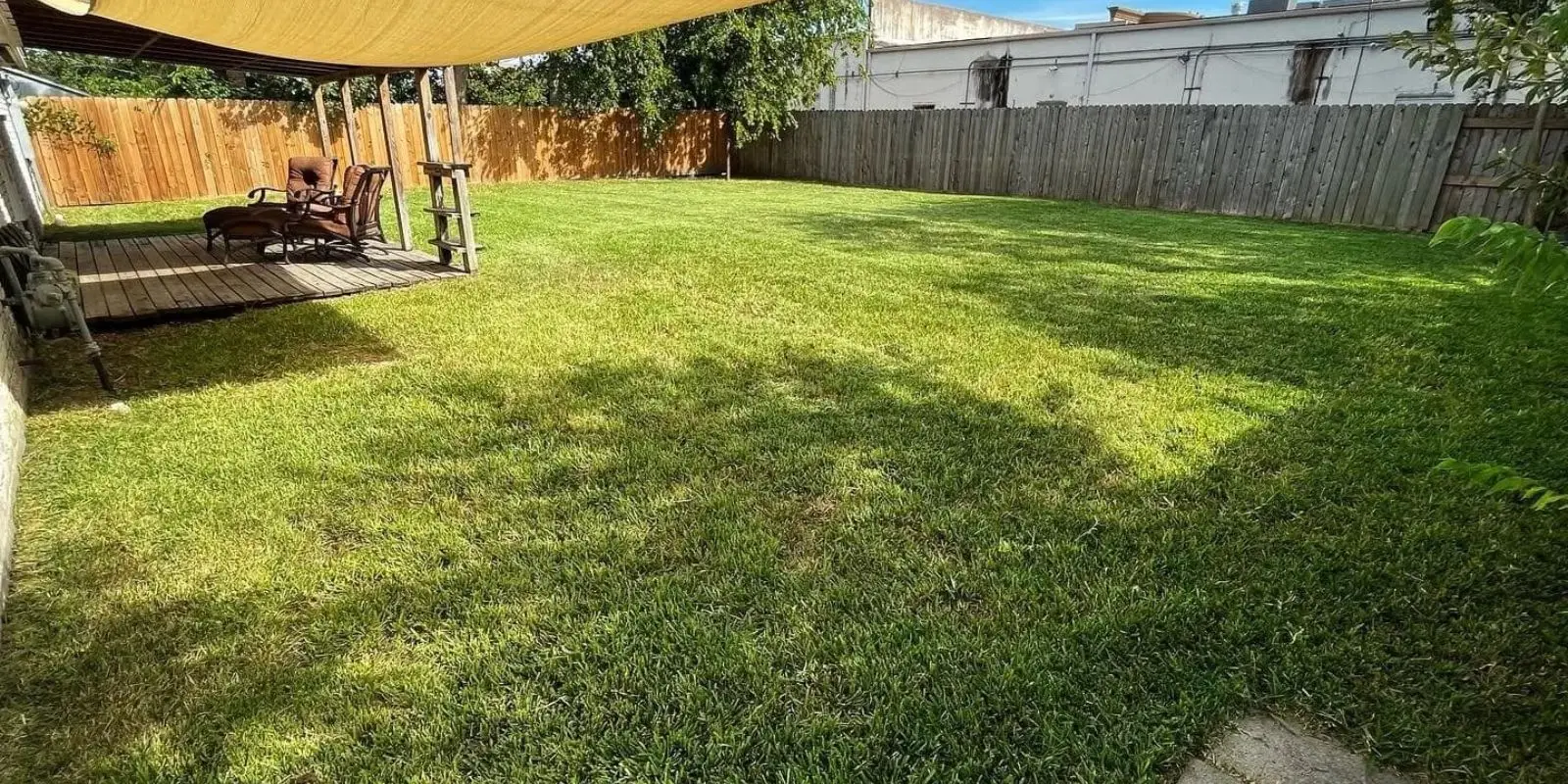
Houston's mature trees are a valuable part of the landscape, but the shade they create can make growing a healthy lawn difficult. Limited sunlight, root competition, and poor drainage frequently contribute to declining grass.
Limited Sunlight Beneath Mature Trees
Grass needs sunlight to produce energy through photosynthesis. When dense tree canopies block that sunlight, grass gradually becomes weaker, thinner, and less capable of recovering from normal wear.
This is especially common in West University Place, where mature live oaks shade compact residential lots, and Piney Point Village, where tall pines and hardwoods create heavily wooded backyards.
Even St. Augustine, one of the more shade-tolerant warm-season grasses, needs adequate light to survive.
According to Texas A&M AgriLife Extension, St. Augustine generally requires at least four to six hours of daily light, depending on the cultivar and type of shade.
Tree Roots Compete With Grass for Water and Nutrients
Large live oaks and other established trees develop extensive root systems that compete with nearby grass for moisture and nutrients.
This competition is especially relevant to River Oaks landscaping, where mature specimen trees anchor established landscapes. Likewise, the expansive lots of Bunker Hill Village properties often contain mature pines and hardwoods.
Increasing irrigation or fertilizer applications won't necessarily solve the problem. If sunlight is the primary limitation, additional maintenance may produce little improvement.
Houston's Clay Soil, Moisture, and Drainage Challenges
Many Houston properties also have clay-rich or compacted soils that drain slowly.
These conditions are particularly relevant in central Houston neighborhoods such as Bellaire and West University Place, where expansive clay soils can complicate lawn drainage.
The National Weather Service reports an average annual rainfall of approximately 51.84 inches at Houston's Intercontinental Airport, based on 1991–2020 climate normals.
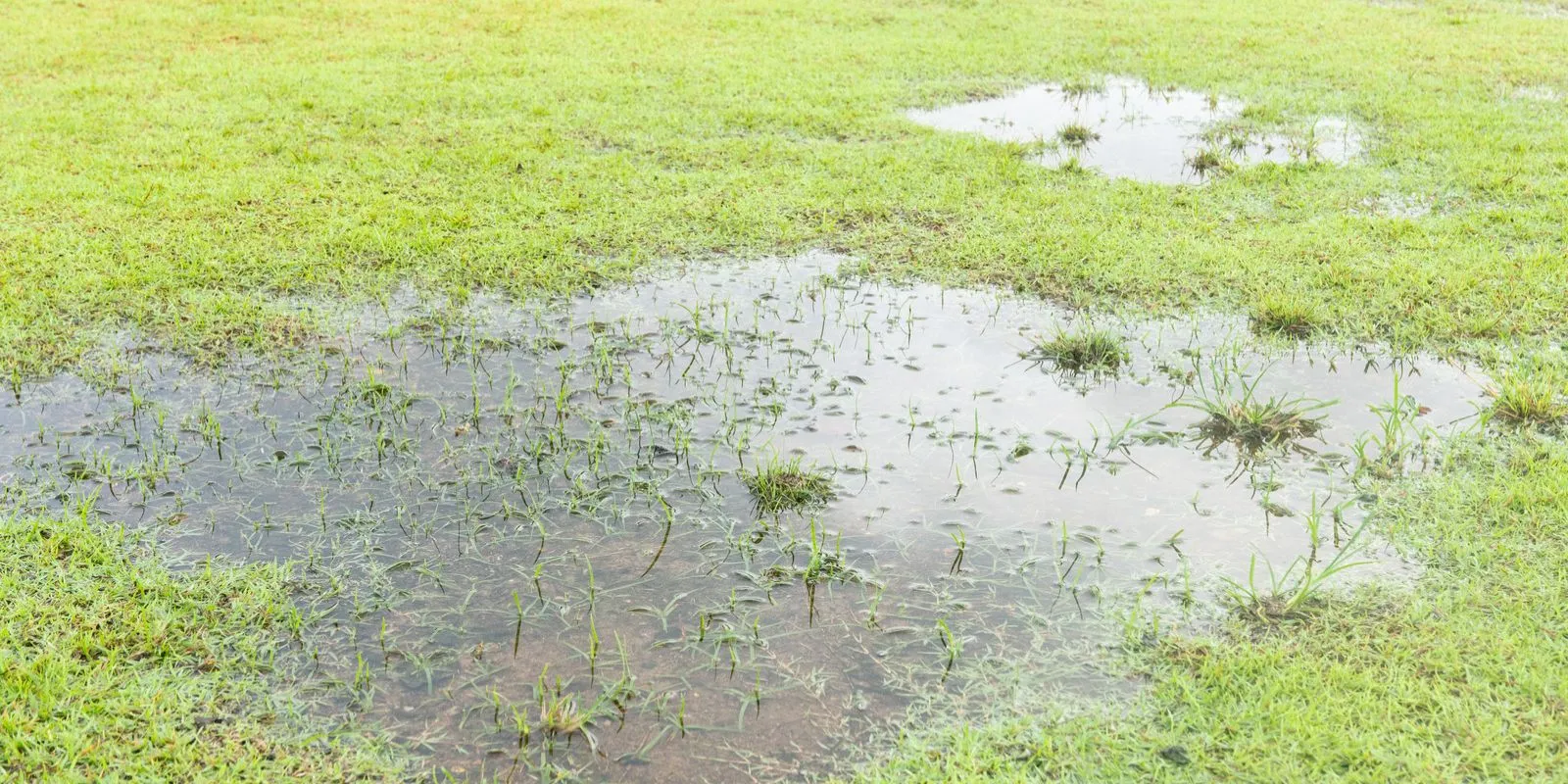
During heavy storms, water can collect in poorly graded areas. Shaded lawns may remain wet longer, increasing the likelihood of muddy patches and unhealthy growing conditions.
These problems are particularly common in low-lying backyard corners and narrow side yards where sunlight and airflow are limited.
Can Natural Grass Grow in a Shaded Houston Yard?
Yes. Natural grass can grow in a shaded Houston backyard, but success depends on the intensity of the shade, the grass variety, soil conditions, and maintenance.
Selecting the right grass is important, but even shade-tolerant varieties have limits.
St. Augustine Grass for Partial Shade
St. Augustine is a popular choice for Houston lawns because it performs well in warm climates and offers comparatively good shade tolerance.
Some cultivars can establish in areas receiving several hours of sunlight or filtered light throughout the day.
However, St. Augustine grass shade tolerance varies by cultivar. A variety that performs well beneath scattered tree branches may struggle in the permanent shadow of a building.
Before installing new sod, determine how much usable sunlight reaches the area during the growing season.
Zoysia Grass as Another Shade-Tolerant Option
Certain Zoysia grass varieties may also work for partially shaded Houston lawns.
Zoysia develops a dense growing surface and can tolerate moderate traffic, making it worth considering for families who want natural grass.
However, Zoysia grass for shaded lawns isn't a universal solution. Cultivars vary in their sunlight requirements, and heavily shaded locations may still prevent healthy establishment.
Why Bermuda Grass Is Often a Poor Choice for Heavy Shade
Bermuda grass performs best in areas receiving abundant direct sunlight.
Although it can tolerate heat and foot traffic, it generally has less shade tolerance than St. Augustine. For backyards beneath mature tree canopies, Bermuda is often a less suitable choice unless significant sunlight reaches the lawn.
How to Improve an Existing Shaded Lawn
Before replacing your entire lawn, consider whether better maintenance could improve its condition.
Measure sunlight exposure, select an appropriate grass variety, maintain the recommended mowing height, and avoid excessive irrigation. Soil testing and drainage improvements may also help identify problems unrelated to shade.
Professional assessment is especially valuable before repeatedly purchasing sod for the same failing areas.
Ventura Landscape provides professional lawn care in Houston, helping homeowners maintain established lawns and identify areas that may need a different landscaping approach.
When Is Artificial Turf the Better Choice for a Shaded Backyard?
Artificial turf becomes particularly attractive when natural grass cannot establish because of persistent shade, repeated foot traffic, or difficult maintenance conditions.
Deeply Shaded Areas Where Grass Consistently Fails
Artificial turf doesn't rely on sunlight for growth, allowing it to maintain a uniform appearance beneath dense tree canopies or beside buildings.
It can be a practical solution when repeated sod installations have failed despite appropriate maintenance. Proper installation is still essential, particularly around trees and in areas with drainage challenges.
Muddy Pet Runs and High-Traffic Play Areas
Dogs and children can quickly wear down natural grass, especially when the lawn is already weakened by shade.
Pet-friendly artificial grass can provide a more durable surface and reduce exposed soil in frequently used areas.
However, synthetic turf isn't maintenance-free. Pet waste must be removed promptly, and the surface needs periodic rinsing and cleaning to control odors and maintain hygiene.
Narrow Side Yards and Small Backyard Spaces
Narrow side yards often receive limited sunlight and may be difficult to mow.
Artificial turf provides consistent coverage without requiring regular mowing, making it useful for small courtyards, walkways, and frequently used outdoor areas.
For homeowners seeking low-maintenance backyard landscaping, installing turf only in problem areas may be more practical than replacing an entire healthy lawn.
Tired of replacing grass in the same shaded spots? Ventura Landscape can evaluate your backyard and recommend artificial turf, natural grass, or a combination that suits your property. Explore our Houston artificial grass installation services to learn more.
Artificial Turf vs. Natural Grass Cost in Houston
Artificial turf typically costs more to install than natural sod, but it can reduce ongoing expenses such as mowing, fertilization, and irrigation. Over time, those savings may help offset the higher upfront investment.
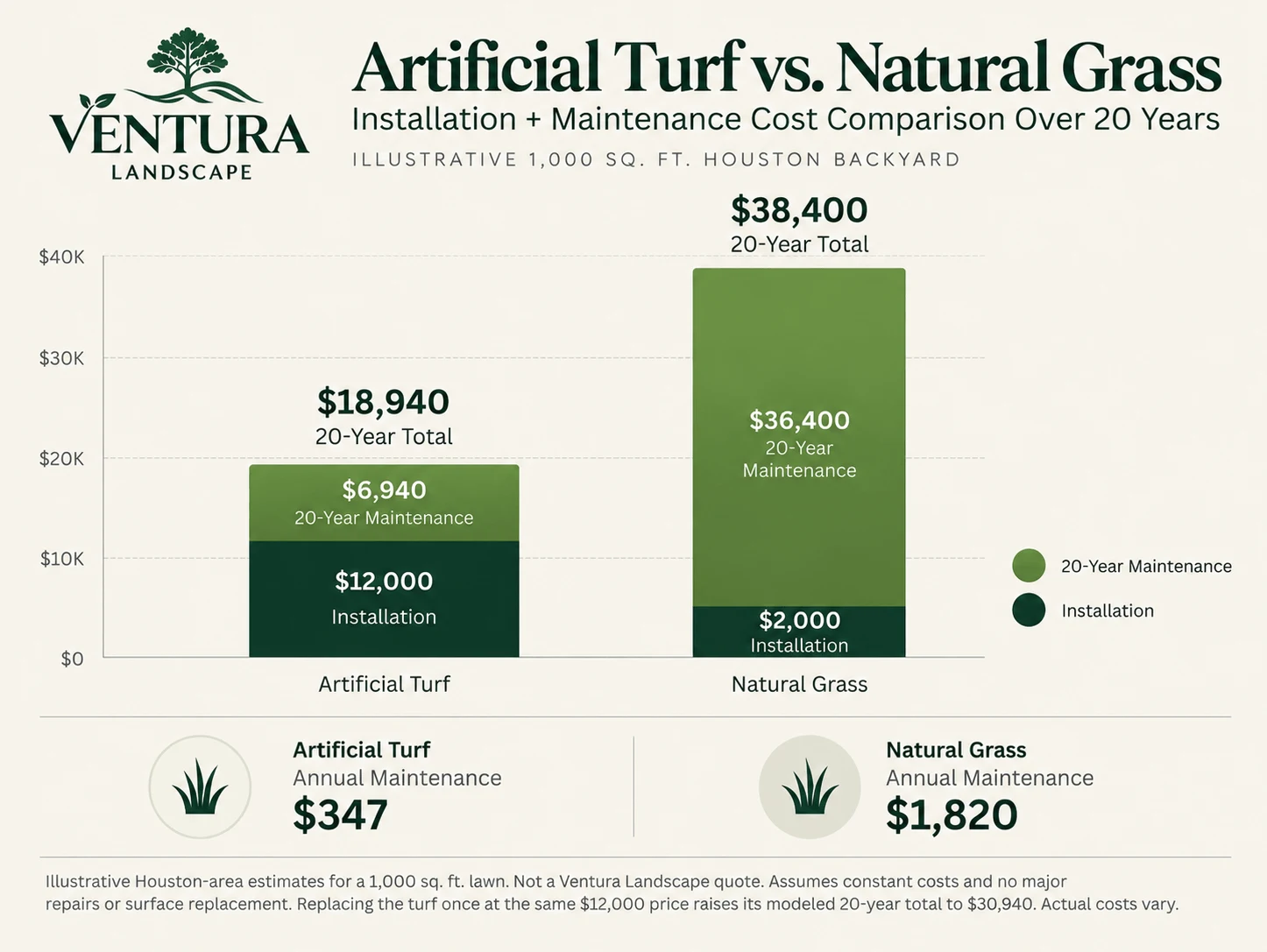
To compare artificial turf vs. natural grass costs fairly, we'll use a 1,000-square-foot Houston backyard and examine installation costs, annual maintenance, and projected expenses over 20 years.
These figures are planning estimates based on published Houston-area pricing and industry cost data, not guaranteed project quotes from Ventura Landscape.
Upfront Installation Costs: Artificial Turf vs. Natural Grass
Artificial turf requires more extensive preparation than natural sod. Professional installation typically involves removing existing vegetation, grading the site, constructing a drainage base, installing synthetic grass, and applying suitable infill.
Natural grass installation generally involves site preparation, sod delivery, laying the sod, and watering it during establishment.
Estimated Houston installation costs for 1,000 square feet
| Installation cost | Artificial turf | Natural grass (sod) |
|---|---|---|
| Price per sq. ft. | $9–$16 | $1–$3 |
| Low-end estimate | $9,000 | $1,000 |
| High-end estimate | $16,000 | $3,000 |
| Representative cost example | $12,000 | $2,000 |
| Additional expenses | Drainage upgrades, difficult excavation, specialty infill | Irrigation installation, substantial soil improvement, grading |
Sources: Houston artificial turf pricing, Angi's Houston sod installation guide, and Turf Network's installation comparison. The representative figures are illustrative amounts within published ranges.
In this example, artificial turf costs approximately $10,000 more to install initially.
However, actual prices depend on the condition of your yard. Houston properties with heavy clay soil, standing water, mature tree roots, or restricted access may require additional preparation.
Ventura Landscape provides free, itemized estimates after assessing your property's dimensions, drainage, and installation requirements. Visit our Houston artificial grass installation page to request an assessment.
Annual Maintenance Costs: Artificial Turf vs. Natural Grass
Natural grass requires ongoing mowing, irrigation, fertilization, and other treatments to maintain healthy growth.
Artificial turf eliminates mowing and fertilization, but still needs occasional cleaning, brushing, and infill maintenance.
Illustrative annual maintenance costs for a 1,000-square-foot Houston lawn
| Maintenance expense | Artificial turf | Natural grass |
|---|---|---|
| Mowing and edging | $0 | $1,350 |
| Fertilization and weed treatments | $0 | $180 |
| Aeration | $0 | $110 |
| Watering or rinsing | $72 | $180 |
| Turf brushing | $175 | $0 |
| Infill replenishment | $100 | $0 |
| Estimated annual total | $347 | $1,820 |
These are illustrative budgeting assumptions, not Ventura Landscape service prices.
Houston's actual water costs depend on usage, utility billing, rainfall, and irrigation habits. The City of Houston's water billing calculator can help homeowners estimate their own expenses.
Ventura Landscape's published maintenance pricing: Comprehensive weekly lawn maintenance starts at $149 per visit. The service can include mowing, trimming, edging, and other property maintenance depending on the selected plan.
That rate covers broader property care rather than mowing only the 1,000-square-foot comparison area, so it is not included in the estimated annual totals above. Replacing a section of lawn with turf also does not necessarily eliminate maintenance needs elsewhere on the property.
Learn more about Ventura Landscape's lawn care services.
Artificial Turf vs. Natural Grass: Total Cost Over 20 Years
Although artificial turf has a higher installation cost, reduced routine maintenance can make it more economical over an extended period.
Using the representative installation prices and annual maintenance assumptions above, here's how costs could accumulate over 20 years.
Illustrative 20-year ownership cost comparison
| Cost category | Artificial turf | Natural grass |
|---|---|---|
| Initial installation | $12,000 | $2,000 |
| Annual maintenance | $347 | $1,820 |
| Maintenance over 20 years | $6,940 | $36,400 |
| Total over 20 years | $18,940 | $38,400 |
Under these assumptions, artificial turf costs $19,460 less over 20 years, despite the higher upfront installation expense.
However, this base comparison assumes the original artificial turf remains in service for the full 20 years and neither surface requires major replacement. It also holds prices constant, excludes financing and inflation, and doesn't include substantial drainage repairs or other major landscaping work.
Turf lifespan varies with product quality, exposure, traffic, and maintenance.
If artificial turf requires one complete $12,000 replacement during the 20-year period, its modeled total rises to $30,940. That would reduce the estimated difference to $7,460. Actual replacement costs could differ because parts of the original base may be reusable.
Natural grass may also require resodding, especially in deeply shaded areas where it repeatedly fails.
When Might Artificial Turf Be Worth the Higher Initial Cost?
Artificial turf may be a worthwhile investment for Houston homeowners who frequently replace dead sod, struggle with muddy pet areas, or pay for ongoing lawn maintenance without achieving consistent results.
However, a healthy natural lawn that receives adequate sunlight may remain more economical, especially if you maintain it yourself.
The best comparison is based on your actual installation quote, expected maintenance expenses, drainage requirements, and how long you intend to use the space.
Want to know what artificial turf would cost for your backyard? Request a free quote from Ventura Landscape for recommendations and pricing tailored to your property.
How Houston's Heat and Rain Affect Artificial and Natural Grass
Houston's climate introduces additional considerations that homeowners should evaluate before selecting a lawn surface.
Does Artificial Grass Get Too Hot in Houston?
Yes. Artificial grass can become significantly hotter than natural grass when exposed to intense direct sunlight.
Living vegetation helps cool the surrounding environment through shade and evapotranspiration, as explained by the U.S. Environmental Protection Agency. Artificial turf doesn't provide this same natural cooling effect.
However, shade from mature trees can reduce direct sunlight exposure, making shaded artificial turf areas different from installations in fully exposed backyards.
Some products and infill options are designed to reduce heat buildup, but they don't eliminate the possibility of hot surfaces. During Houston summers, always check turf temperatures before allowing children or pets to play barefoot or with unprotected paws.
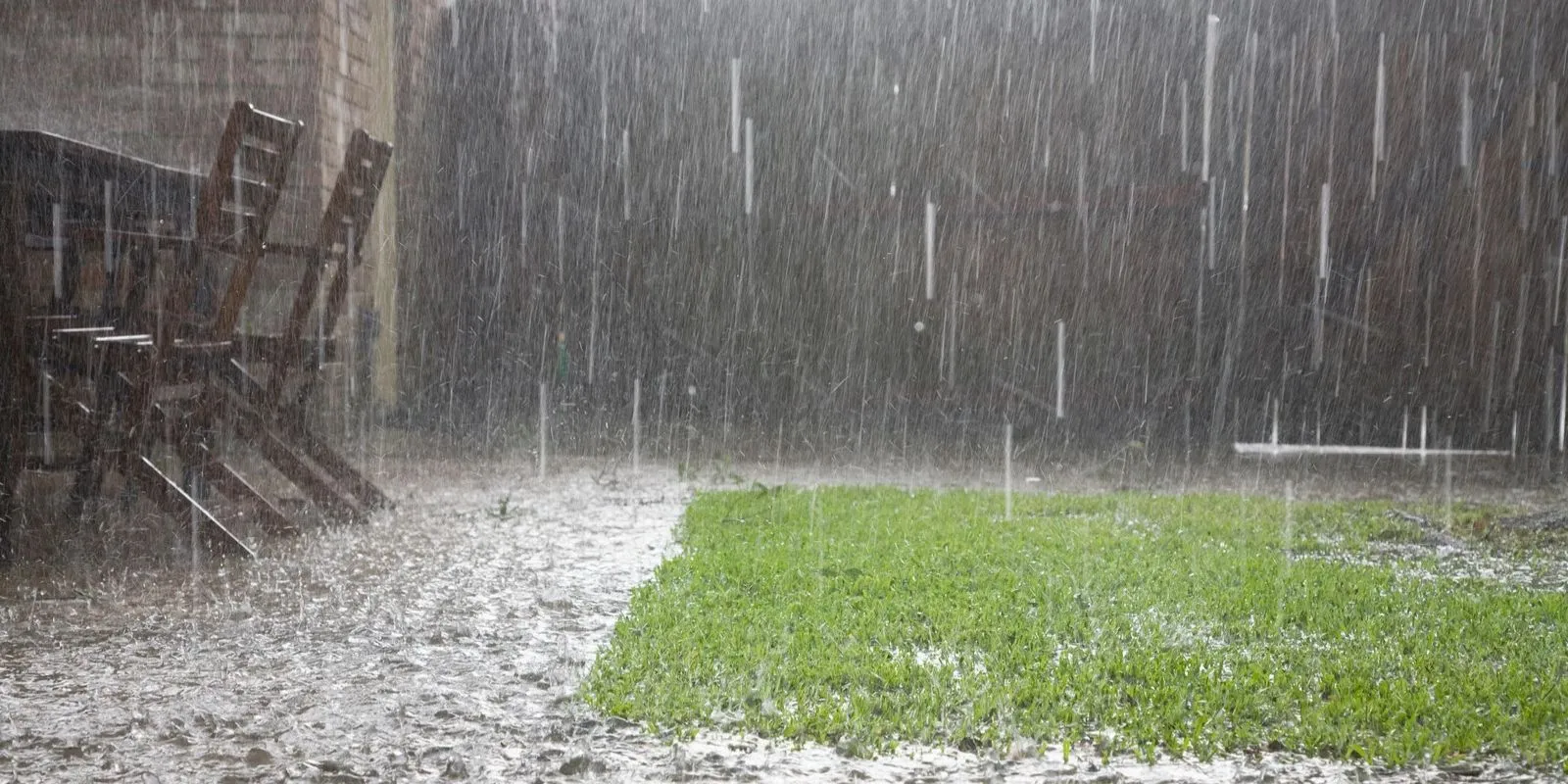
Which Option Handles Houston's Heavy Rain Better?
Both artificial and natural grass can experience drainage problems when the underlying ground isn't prepared correctly.
Artificial grass often features permeable backing that allows water to pass through the surface. However, water must also move through the base materials and into an appropriate drainage outlet. If water collects beneath the installation, artificial turf alone won't prevent pooling or flooding.
Ventura Landscape's artificial grass installation process includes site preparation, grading, and a compacted, free-draining aggregate base designed to help manage water movement.
Natural grass can also manage rainfall effectively when the soil and grading are suitable, but compacted or poorly drained lawns may remain saturated.
For Houston homeowners, proper drainage design matters regardless of the surface selected.
What About Environmental Impact and Tree Health?
Both options involve environmental trade-offs.
Natural grass provides living vegetation, supports biological activity, and contributes to surface cooling. However, it may require irrigation, mowing, and lawn treatments.
Artificial turf reduces routine watering and eliminates mowing, but it's manufactured from synthetic materials and eventually requires replacement.
Tree health is another important consideration. Excavation, soil compaction, and changes to ground levels around established trees can damage roots. Before installing turf beneath mature oaks, have the proposed ground preparation evaluated, with an arborist involved where appropriate.
Protecting valuable trees should remain a priority throughout the landscaping project.
Can You Combine Artificial Turf and Natural Grass in One Backyard?
Absolutely. Homeowners don't have to choose between artificial turf and natural grass for their entire property. In many Houston backyards, combining different surfaces creates a more practical and visually appealing landscape.
For example, you might preserve a healthy natural lawn in the sunnier part of your backyard while installing artificial turf beneath trees where sod repeatedly fails. Another option is to create a dedicated synthetic turf pet run while maintaining natural grass in larger recreation areas.
For heavily shaded spaces where neither grass option is ideal, shade-tolerant plants, mulch beds, and hardscaping can provide an attractive alternative. Thoughtful transitions between these materials help maintain a cohesive design.
Ventura Landscape offers Houston landscape design services that can incorporate planting beds, natural lawns, and artificial grass. Adding paver walkways and patios can also improve accessibility and create usable outdoor living spaces without forcing grass into unsuitable growing conditions.
A mixed approach allows homeowners to preserve the advantages of natural landscaping while reducing maintenance in persistent problem areas.
How Ventura Landscape Helps Houston Homeowners Choose the Right Lawn
At Ventura Landscape, we understand that every Houston backyard has different growing conditions and landscaping needs.
As a locally owned landscaping company, we provide both natural lawn maintenance and artificial grass installation, allowing us to recommend solutions based on the property rather than a single product.
Our assessment considers sunlight exposure, existing lawn conditions, drainage, tree roots, pet activity, and your preferred maintenance requirements.
We serve homeowners in West University Place, River Oaks, and Bellaire, along with other Houston neighborhoods we serve.
From preserving established lawns to transforming difficult shaded areas, our goal is to create landscapes that are attractive, functional, and suited to Houston's conditions.
Learn more about Ventura Landscape and our approach to professional property care.
Get Expert Help Choosing Artificial or Natural Grass for Your Houston Backyard
If your backyard receives very little sunlight, artificial turf may provide the consistent coverage you've been looking for. If your lawn receives adequate filtered light, a carefully selected natural grass variety may still be the better choice.
The right decision depends on your property's specific conditions.
Whether you're considering artificial turf for a muddy backyard or trying to keep natural grass healthy beneath mature trees, Ventura Landscape can help you evaluate your options.
Request a free quote or call 713-518-7219 to discuss your Houston landscaping project.
Frequently Asked Questions
Will Artificial Grass Work in Complete Shade?
Yes. Artificial grass can maintain its appearance in complete shade because it doesn't require sunlight for growth. This makes it suitable for areas beneath dense tree canopies or beside buildings. However, successful installation still requires appropriate drainage, proper base preparation, and regular cleaning to manage debris and moisture.
How Many Hours of Sun Does St. Augustine Grass Need in Houston?
St. Augustine grass generally needs approximately four to six hours of daily light to survive, according to Texas A&M AgriLife Extension. Requirements vary by cultivar and whether the grass receives direct or filtered sunlight. Heavily shaded areas may not support healthy growth even with regular watering and fertilization.
Does Artificial Grass Drain Well During Heavy Houston Rain?
Artificial grass can drain effectively during heavy rain when installed with permeable backing, a properly constructed drainage base, and suitable grading. However, the surface alone cannot correct existing drainage problems. Clay-rich soil, low spots, and inadequate drainage outlets may require additional site preparation before installation.
Is Artificial Grass More Expensive Than Natural Grass Over Time?
Artificial grass generally costs more to install than natural sod but can reduce recurring mowing, irrigation, and some maintenance expenses. Long-term costs depend on installation conditions, cleaning requirements, repairs, and eventual replacement. Natural grass may remain less expensive when it grows successfully without frequent restoration.
Can I Install Artificial Grass in Just One Part of My Backyard?
Yes. Partial-yard artificial grass installations are a practical option for Houston homeowners with isolated problem areas. Synthetic turf can replace grass beneath heavily shaded trees, along narrow side yards, or in pet runs while the rest of the natural lawn remains intact. Thoughtful landscape design can blend the different surfaces seamlessly.